


Where Design Meets Tea Ceremony: Innovating Tradition for the World — Interview with Prof. Toshiro Tamada (Part 3)
Today, "Matcha" is capturing significant global attention. At the forefront of modern design management, Prof. Toshiro Tamada (Professor Emeritus at Tokyo Zokei University) has long hosted creative tea ceremonies both in Japan and internationally.
We spoke with Prof. Tamada, who thoughtfully incorporates ISSO TEA's "Ceremonial Grade Matcha" into his own tea gatherings.
While remaining at the leading edge of contemporary design management, he continuously explores the deep essence of tea. In this interview, he shares his unique perspective—the reality behind the global matcha trend, the intellectual playfulness of reinterpreting spaces ("mitate"), and why we seek authentic, tangible experiences in modern life.
We are pleased to present this three-part series exploring the rich spirituality of the Way of Tea and its profound connection to design.

An All-Encompassing Comprehensive Art — Inspirations Drawn from the Way of Tea
ISSO: For many years, you have been involved in industrial design education and the promotion of "design management." How do you connect the highly modern, business-oriented field of design management with the 400-year-old traditional world of the Way of Tea?
Tamada: At first glance, cutting-edge design management and four-century-old tea ceremony might seem completely unrelated. However, in my mind, they exist within the very same context.
The essence of design management is not merely making physical objects look beautiful; it lies in integrally managing human experiences, spaces, time, and communication to create true value.
Viewing the world of tea through this lens, one realizes that the Way of Tea is the ultimate comprehensive art—a perfectly design-managed system that Japan can proudly share with the world. Incorporating concepts, aesthetics, spirituality, taste, movement, views of nature, and religious perspectives, the Way of Tea continuously offers deep inspiration.

Why We Seek "Physical Experience" in the Age of AI
The "Final 2%" Where Machines Can Never Enter
ISSO: We live in an era where digital tools, smartphones, and AI handle so much with maximum efficiency. In such a world, what is the significance of intentionally taking time and effort to host physical, real-life tea gatherings?
Tamada: I firmly believe that this represents the value of "physical experience"—something humanity will need most moving forward.
AI excels at gathering and processing past data from the internet, but it cannot sharpen its own five senses to create genuinely original creation from scratch. Digital technology is incredibly convenient, but it cannot enter the real, physical realm.
We see the same phenomenon in Japanese manufacturing and craftsmanship. Consider high-purity hydrogen fluoride used for semiconductor cleaning, precision lenses, or specialized marine propellers.
Today, advanced automated machining can flawlessly carve out up to 98% of a precision component. Yet, the critical fine-tuning of the "final 2%"—which ultimate determines the product's performance—is still entrusted to the delicate tactile sensitivity and intuition of master artisans.
This human "delicate sensibility" that machines can never replicate is precisely the spark that gives birth to new culture.

A tea gathering is the ultimate embodiment of this idea. Experiencing the shift of seasons and passage of time on your skin, searching for flowers to arrange, and sharing presence and atmosphere with one another.
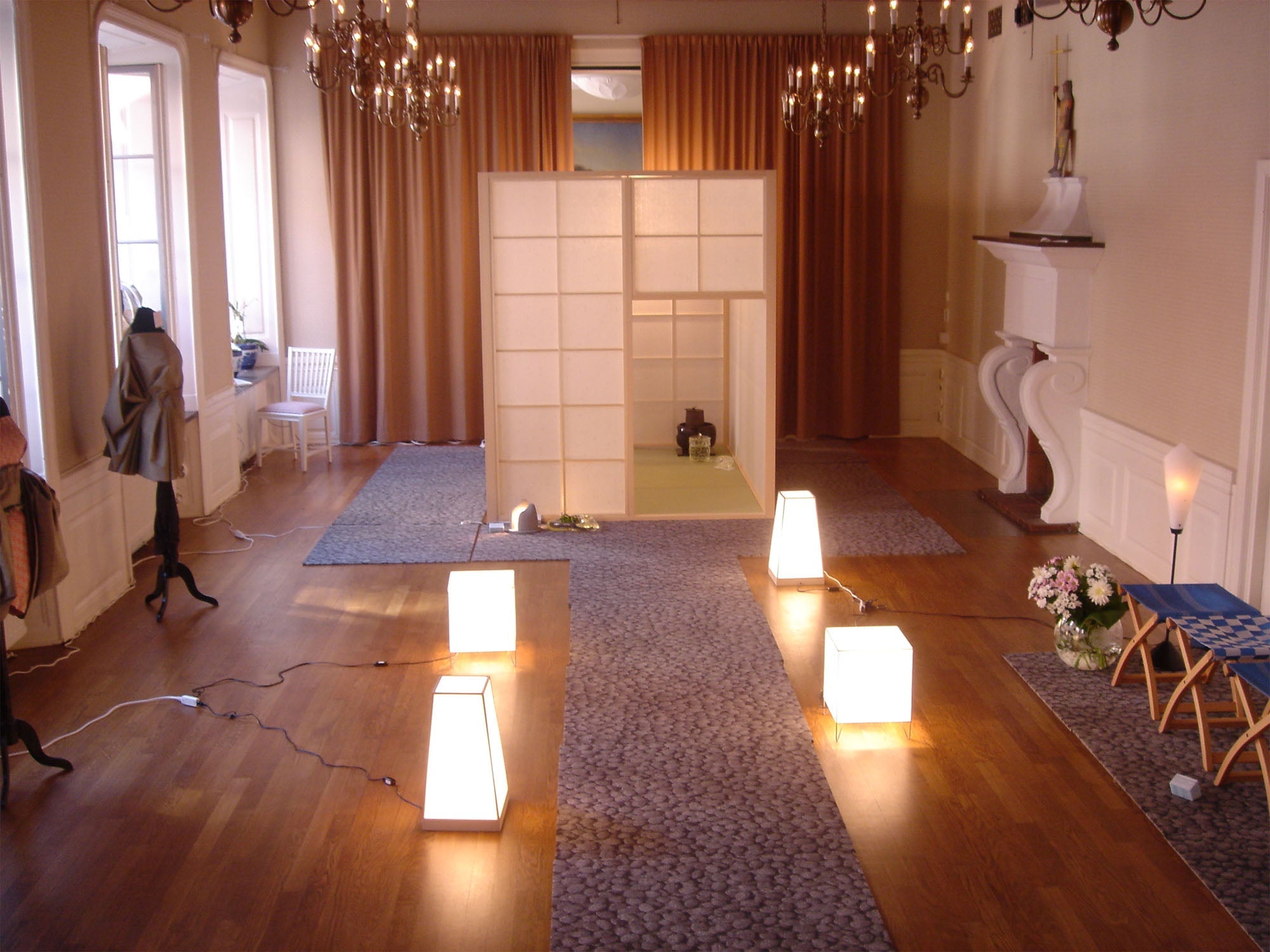
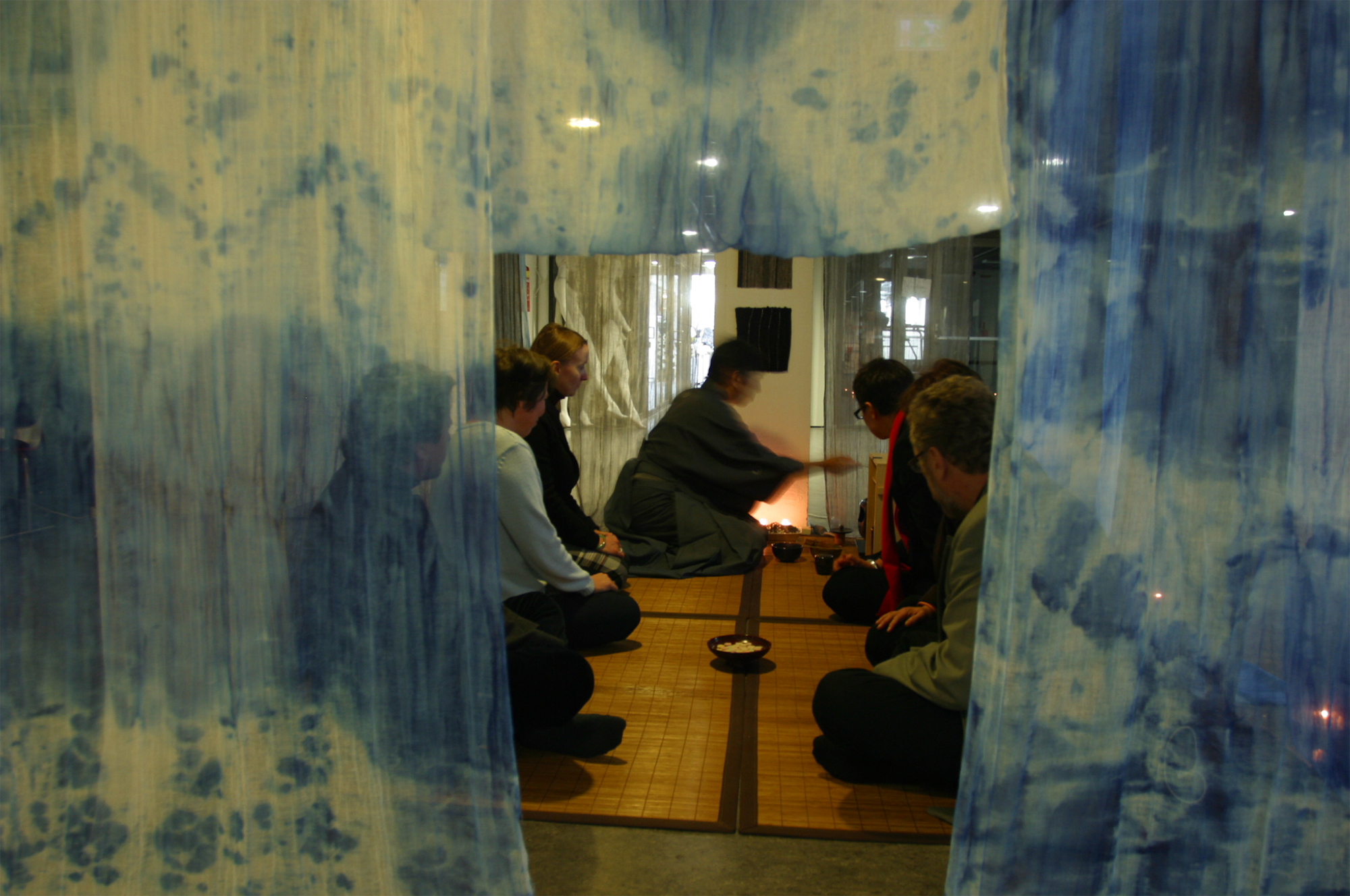
The "Akatsuki-no-chaji" (Dawn Tea Ceremony) takes place during the coldest hours from late year through February, celebrating the early morning sunrise. The host conducts the ceremony under gentle candlelight.
During a dawn tea gathering, almost no words are spoken. We intentionally choose silence. By purposefully setting aside verbal communication, interaction takes place entirely through refined movements, heightening the five senses to their absolute limit.
Listening attentively to the "kamanari" (the gentle hum of boiling water in the iron kettle) and communicating through subtle sounds—like "chiri-uchi" as the silk cloth (fukusa) is snapped firm.
Through this non-verbal communication, everyone shares a singular, fleeting space in time. It is precisely through this experience that our sensibilities are refined, allowing us to reflect deeply upon ourselves.

Recognizing "Authentic Matcha Flavor" Overseas and the Art of Proper Preparation
Savoring Pure Matcha
ISSO: Earlier you mentioned the global "matcha boom." How do people overseas perceive the actual flavor of matcha itself?
Tamada: While matcha lattes are a wonderful entry point, I find that people abroad also deeply appreciate the unsweetened, natural flavor of pure matcha. In Europe, for example, people are accustomed to enjoying coffee, black tea, and distinct herbal teas. Because of this, they readily embrace matcha's unique profile, possessing a culinary palate that genuinely finds it delicious.
ISSO: So they appreciate it purely for its taste?
Tamada: Precisely. However, that relies on the prerequisite that the tea is high quality and prepared properly. If someone has a negative experience with matcha, it is often because they had lower-grade tea, or it was prepared at the wrong temperature or ratio. It is just like coffee: carefully roasted beans brewed with precision yield an exceptional cup, whereas improper extraction results in bitterness or dilution. Matcha operates on the exact same principle.

Differences in Flavor: Omotesenke vs. Urasenke Whisking Techniques
ISSO: Is the standard for "deliciousness" found in the balance of umami and sweetness, or perhaps its depth?
Tamada: Yes, depth, balance, and water temperature play key roles. Interestingly, the Omotesenke and Urasenke schools have distinct approaches to whisking matcha. Urasenke whisk vigorously to create a rich layer of fine foam on the surface. In contrast, in Omotesenke—the school to which I belong—we whisk gently to blend the matcha gracefully with hot water without creating thick foam.
High-quality tea leaves ground carefully on stone mills possess a compelling quality that 8 or 9 out of 10 people will find delicious, regardless of their background or country. When we served ISSO TEA's Ceremonial Grade Matcha at our tea gathering, its exquisite natural flavor and rich umami stood out beautifully, earning enthusiastic feedback from guests who praised its vibrant color and exceptional taste.

Looking to the Future — Passing the "Cultural Wellspring" of Tea to the Next Generation
Conveying Innovation Hidden Within Tradition
ISSO: Finally, could you share your future aspirations and the message you hope to convey to audiences in Japan and around the world?
Tamada: Having spent many years in the progressive field of design management, I feel a growing desire to focus my life's work on promoting Japanese culture and passing down the spirit of tea both domestically and internationally.

Workshop designing a Karesansui garden to understand Japanese aesthetics
Japanese tea culture is an endless "cultural wellspring" of creativity encompassing ideas, aesthetics, spirituality, design, and art. Over 400 years ago, visionaries like Sen no Rikyu broke established conventions to forge new aesthetic paradigms; innovation has always been at the core of true tradition. My role is not simply to preserve static forms, but to share that flexible mindset and spirit with the world.

Creating Spaces Where Anyone Can Experience the Essence
Tamada: While I previously taught within university settings, moving forward I want to independently create spaces where people across the globe can experience the true essence of tea. I am currently planning new projects in Poland as well. Producing collaborative spaces that bring passionate people together across borders is a deeply fulfilling and exciting venture for me.
As long as the foundational spirit remains grounded, tea can be remarkably open, dynamic, and inspiring to contemporary creativity. Alongside the exceptional quality of ISSO TEA, I look forward to delivering this rich, physical culture to the world and the generations to come.
ISSO: We are deeply excited for your upcoming endeavors and honored that ISSO TEA can play a role in them. Thank you very much for sharing such insightful perspectives today.

Toshiro Tamada
Born in Fukushima Prefecture in 1957.
Graduated from Tokyo Zokei University (Department of Design) and completed his Master's degree in Industrial Design at the Graduate School of Art and Design, University of Tsukuba.
After working at the Tokyo Metropolitan Industrial Technology Research Institute, serving as an Associate Professor at Tohoku University of Art & Design, and as a Visiting Professor at the University of Art and Design Helsinki (now Aalto University), he joined Tokyo Zokei University in 2006. His fields of expertise are Industrial Design and Design Management, actively leading regional industry production and design research and development.
He served as Vice President of Tokyo Zokei University from 2014 to 2018 and was named Professor Emeritus in 2023.
In 2020, he founded the Japan Design Management Association (JDMA) and serves as its Representative Director.
He is an Associate Professor in the Omotesenke Domonkai tea school, holding the tea name Tamada Soshun.
His publication credits include Regional Design: Lessons from the 'Climats' of Burgundy, France (Co-authored / Gendaikikakushitsu, 2018), ICONIC WORLD (Tohoshuppan, 2020), Indicators of Design Management and the Founding of the Japan Design Management Association (The Industrial Craft Foundation / Japan Crafts & Technology Association, 2023), 7 Indicators of Design Management: DESIGN DYNAMISM (Japan Design Management Association), and A Journey Through Ancient Visual Culture: Primitive Landscapes and Icons of Faith (Text by Toshiro Tamada, Photography by Kazuto Nakazato and Mao Matsuda / FUIGOLAND LLC, Sold by JDMA, 2024; collected in the Miwayama Library of Omiwa Shrine).

%20has%20long%20hosted%20creative...)